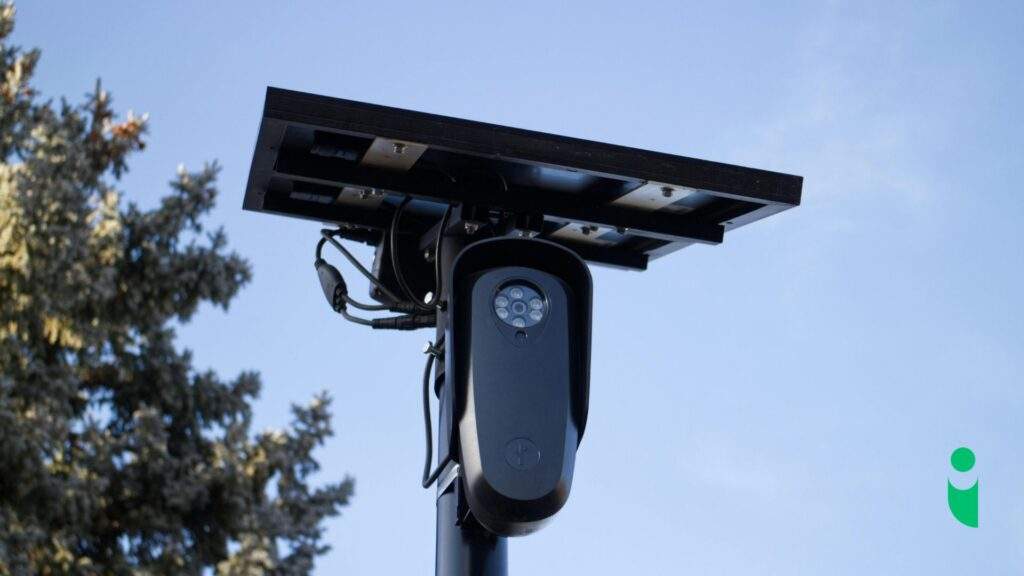
Updated September 18, 2026
Security technology trends are moving fast. For property managers, facility directors, and business owners, keeping up matters more than ever. The tools protecting your building today may not cut it tomorrow.
Video surveillance is getting smarter. Access control is going touchless. Security systems are learning to spot problems before they grow. These aren’t future ideas. They’re changes happening right now in office buildings, hospitals, hotels, warehouses, and houses of worship across the country.
Infassure has helped businesses choose and install the right security technology since 1985. We work with commercial properties in Dallas, Fort Worth, Houston, and nationwide. Here are the eight security technology trends we’re installing most often in 2026, what each one does, and how to decide which ones your building needs.
Key takeaways
- AI video analytics is the most common security upgrade in commercial buildings in 2026 because it cuts false alarms and replaces manual monitoring.
- Cloud-based platforms let one person manage cameras, doors, and alarms across every building from a phone.
- Mobile credentials are replacing key cards because they can’t be copied and can be revoked instantly.
- Smart sensors with edge processing respond in milliseconds and filter out false alarms at the device.
- Integrated platforms tie cameras, access, intercoms, and alarms together so one event triggers a coordinated response.
- Behavioral analytics learn what normal looks like at your building and flag what doesn’t.
- License plate recognition is moving from parking enforcement into everyday gate and garage access.
What Is Security Technology?
Security technology is the hardware, software, and processes that protect people, property, and assets from potential threats. For commercial buildings, that means tools like video surveillance cameras, access control readers, intrusion alarms, intercoms, and the platforms that connect them.
What’s changed is how these tools talk to each other. Older security systems just recorded footage for later review. Modern systems actively watch what’s happening right now. That shift from reactive to proactive is what makes today’s security tech so much more useful.
Why Security Trends Matter for Your Business
Falling behind on security trends leaves your building open to risk. It can also cost you money. Outdated systems produce more false alarms. Those false alarms waste the time of security personnel and can make your team numb to real emergencies.
Older hardware often can’t connect to newer platforms. That creates blind spots in your coverage. Staying current with the security industry helps you reduce risk, lower costs, and keep your facility safer.
This applies whether you manage a single office in Houston, a multi-site operation across Texas, or properties spread nationwide.
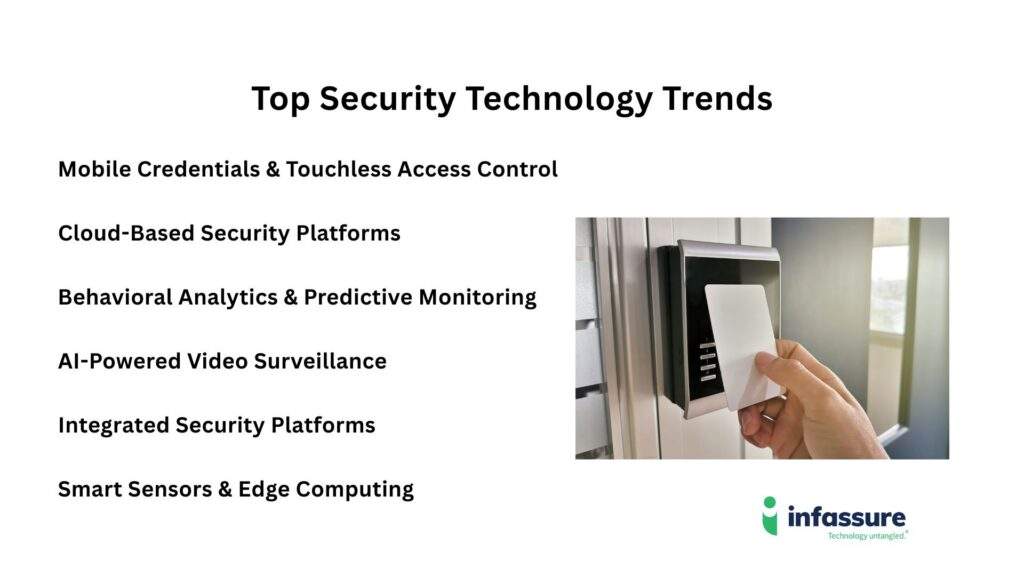
The 8 Security Technology Trends Shaping Commercial Buildings in 2026
1. AI-Powered Video Surveillance
AI is the biggest shift in video security right now. Traditional cameras record footage someone has to review later. AI-powered systems analyze video in real time and flag unusual activity as it happens.
An AI camera can detect when someone enters a restricted area. It can spot a vehicle lingering too long in a loading zone. It can notice movement patterns that don’t match normal building activity.
Instead of relying on a guard watching dozens of screens, the system highlights what needs attention. That means faster response times, fewer false alarms, and better use of your security personnel’s time. AI video surveillance is already common in office buildings, healthcare facilities, and industrial sites, and the cost has come down enough that mid-size properties are adding it during routine camera replacements rather than as a separate project.
2. Cloud-Based Security Platforms
Cloud-based security systems let you monitor and manage your buildings from anywhere. You don’t need to be sitting in an on-site control room. With a cloud platform, you can:
- View live camera feeds from your phone or laptop
- Adjust access permissions remotely
- Pull up event logs for any location
- Receive real-time alerts when something needs attention
This is especially helpful for organizations managing multiple properties. Instead of separate systems at each site, a cloud platform gives you one dashboard with a view of everything. You can spot security risks across your portfolio without driving between buildings.
Cloud systems also scale easily. Adding new cameras, doors, or locations doesn’t mean overhauling your setup. You just connect the new devices to the platform you already have.
3. Mobile Credentials and Touchless Access Control
Key cards and fobs aren’t disappearing overnight. But mobile credentials are quickly becoming the preferred option. With mobile access, tenants and employees use their smartphones as digital keys. Property managers can issue, revoke, or update credentials remotely.
This cuts the security risk of lost or shared cards. If someone loses their phone, you can disable access instantly from the management platform. That’s a big upgrade from traditional key cards, which can be copied or passed around without anyone knowing.
For apartment communities, office towers, and mixed-use properties, mobile access gives residents and workers a smoother experience. It also gives managers tighter control over unauthorized access.
4. Smart Sensors and Edge Computing
Smart sensors add a new layer of awareness to physical security. These devices detect motion, temperature changes, glass breakage, unusual sounds, and hazards like smoke or water leaks.
When paired with edge computing, they process data right at the device. That means they can respond almost instantly instead of waiting for a central server.
Here’s an example. A smart sensor at a warehouse loading dock detects after-hours motion. It immediately locks nearby doors, activates cameras, and sends an alert to security personnel. That speed matters when you’re trying to stop unauthorized access before it becomes a bigger problem.
Edge-enabled sensors also help cut false alarms. They use local intelligence to tell the difference between a real security event and something harmless, like an animal crossing a parking lot.
5. Integrated Security Platforms
One of the clearest security trends in 2026 is the move toward integration. Instead of running separate systems for cameras, access control, intercoms, and alarms, more businesses are connecting everything into one platform.
When a door is forced open, the nearest camera starts recording. An alert goes to the security team. The intercom at that entry point activates. All of this happens automatically, without anyone pressing a button.
This kind of coordination gives security professionals a complete picture of any incident. It also helps when your building relies on fire/life safety systems, paging, or emergency communications. Integration makes sure those systems work together during a critical event.
6. Behavioral Analytics and Predictive Monitoring
Behavioral analytics uses AI to learn what “normal” looks like at your facility. Then it flags anything that breaks the pattern. This goes beyond simple motion detection.
Say a particular entrance sees steady traffic between 7 a.m. and 7 p.m. on weekdays. If someone tries to access that door at 2 a.m. on a Saturday, the system treats it as higher risk. Over time, these systems get smarter and more accurate. That means fewer false alarms and better detection of real potential threats.
This approach helps security teams focus where it matters most.
7. Cyber-Hardened Physical Security
Every camera, reader, and control panel installed today is a device on your network. If it’s not secured, it’s a way in. A poorly configured security camera can give an attacker a path to your business systems, and an unsecured access panel can be told to unlock a door remotely.
Cyber-hardening is the practice of installing physical security equipment the way IT would install a server. In 2026 that means:
- OSDP instead of Wiegand. OSDP is the encrypted protocol between readers and panels. Wiegand, the older standard, sends credential data in the clear and can be intercepted at the wire. New installs should use OSDP.
- Network segmentation. Cameras and access control live on their own VLAN, separate from the business network, so a compromised camera can’t reach your file server.
- Firmware and password management. Default passwords get changed. Firmware gets updated on a schedule. Devices that no longer receive updates get replaced.
- Encrypted credentials. 13.56 MHz smart cards and mobile credentials instead of 125 kHz proximity cards, which can be cloned in seconds.
Verizon’s Data Breach Investigations Report found that nearly 40% of breaches by outside attackers involve stolen credentials. Physical security equipment is part of that attack surface now, not separate from it.
[TIM: How often do you find Wiegand wiring, default passwords, or cameras on the main network during a site assessment? What’s the typical fix and does it require new hardware or just reconfiguration?
8. License Plate Recognition and Vehicle Access
License plate recognition (LPR) cameras read plates as vehicles approach and match them against a list. For years this was a parking enforcement tool. In 2026 it’s becoming an access control method.
For commercial buildings, that looks like:
- Garage and gate access without a fob. Tenant vehicles are registered once. The gate opens when the plate is read. No card to lose, no window to roll down.
- Visitor and delivery management. A visitor’s plate is added for the day and expires automatically.
- Incident records. Every vehicle entering and leaving is logged with a timestamp and image, which is useful for parking disputes, break-ins, and insurance.
- Integration with the rest of the system. An unrecognized vehicle after hours can trigger a camera alert and a notification to security, the same way a forced door would.
LPR works best alongside a traditional gate reader rather than replacing it, since plates can be obscured by weather, lighting, or dirt. For multi-tenant buildings, apartment communities, and any property with a controlled lot, it’s one of the more practical upgrades on this list.
Trends We’re Not Recommending for Most Buildings Yet
Not everything in the trade press belongs in your building. A few things we get asked about that we usually steer clients away from, at least for now:
- Facial recognition for everyday door access. The technology works, but privacy laws vary by state, tenant pushback is common, and the accuracy gap between a well-lit lobby and a garage at night is real. We recommend it for specific high-security doors, not building entrances.
- Autonomous security robots. They get attention, but for most commercial properties a well-placed camera system with AI analytics does the same job for a fraction of the cost and with fewer breakdowns.
- Drone patrols. Useful for very large industrial sites and critical infrastructure. Not practical for an office building or a hospital campus.
- Replacing every camera to get AI. Often unnecessary. Many analytics platforms run on existing IP cameras. Ask before you rip and replace.
Questions? Request a quote.
Industries That Benefit From These Security Trends
These security technology trends aren’t limited to one type of building. They apply across a wide range of industries, including many of the sectors Infassure serves in Dallas, Fort Worth, Houston, and nationwide:
- Healthcare and Medical Buildings: Hospitals and clinics need tight control over pharmacies, operating rooms, and patient records. AI cameras and mobile credentials help staff move securely without slowing down care.
- Hotels and Hospitality: Guest experience and safety go hand in hand. Cloud-based platforms let operators manage room access, back-of-house entry, and common areas from one system.
- Houses of Worship: Churches, synagogues, mosques, and other congregations want to stay welcoming while keeping people safe. Integrated video surveillance, access control, and emergency communication systems make that possible.
- Industrial and Manufacturing: Warehouses, plants, and distribution centers run around the clock with large perimeters. AI cameras, smart sensors, and cloud platforms provide the visibility security teams need.
- Commercial Office Buildings: Multi-tenant properties benefit from mobile access, behavioral analytics, and integrated platforms that simplify management across floors and common areas.
- Schools and Universities: Campuses need to control building access while keeping movement easy for students and staff. Smart sensors and cloud-based monitoring help balance those goals.
- Multi-Family and Apartment Communities: Gate access, visitor management, and package areas all benefit from mobile credentials and video verification at entry points.
How to Evaluate Your Current Security Systems
Not sure if your building’s security measures are keeping up? Ask yourself these questions:
- Can your security team view camera feeds and manage door access remotely?
- Are you still using physical keys or basic key cards that can’t be updated from a dashboard?
- How often do you deal with false alarms that waste time and resources?
- Do your cameras just record, or can they detect and alert on unusual activity in real time?
- Are your security, access control, and communication systems connected, or are they running on their own?
If any of those highlight gaps, it may be time for an upgrade. The good news is that many of these technologies can be added in phases. You don’t have to replace everything at once.
Planning a Security Technology Upgrade
Upgrading your security tech starts with understanding your risks. A hospital has different needs than a hotel. A downtown Dallas high-rise faces different challenges than a Houston-area warehouse. That’s why cookie-cutter solutions rarely work.
Here’s a good starting point:
Start with a site assessment. Walk your facility with a security professional who can spot vulnerabilities. Look for blind spots in camera coverage, doors without electronic access control, and communication gaps.
Focus on your highest-risk areas first. Put your budget where a failure would have the biggest impact. That could be a server room, a pharmacy, a loading dock, or a main entrance.
Pick systems that can grow with you. Cloud-based and modular platforms make it easy to add cameras, doors, or locations later without starting from scratch.
Work with an experienced integrator. The technology is only as good as the installation. Infassure manages the full process, from design through installation and ongoing support, so everything works together the way it should.
What to Do Next
The security technology trends shaping 2026 aren’t just about newer equipment. They’re about building smarter, more connected systems that help security professionals do their jobs better.
Whether you manage one commercial building or a portfolio of properties across Texas and beyond, the right security tech makes a real difference in how you protect your people and your operations.
Ready to see where your building stands? Request a quote or call (972) 680-7800 in North Texas or (281) 640-3326 in Houston to talk with an Infassure team member about a security assessment. Our offices in Richardson and Houston serve Dallas-Fort Worth and the Greater Houston area, and we handle multi-site projects nationwide.